 As I'm a Syracuse alumnus, my Orange coverplate: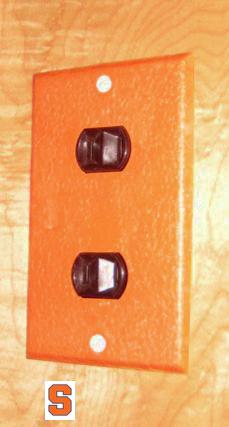
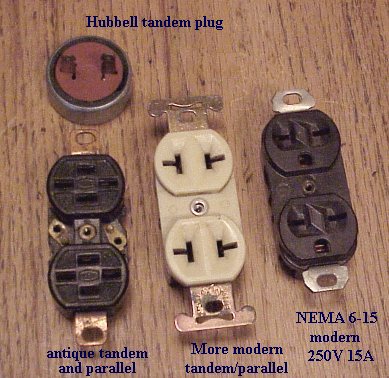
A real antique power outlet. Combination tandem and parallel slots.
The parallel slots accept modern non-polarized line cords. The
tandem slots would accept a 250V 15A plug if you removed its
ground prong. I even found a Hubble tandem plug without ground of post-war
vintage that fits. Appears that back in the early days of electricity,
there were two different kinds of 120VAC plugs, parallel and tandem.
And this outlet was made to support both.
No UL seal of approval on the antique power outlet, UL
may not have existed a hundred + years
ago. A more modern tandem/parallel outlet is also pictured, alongside
the antique and a modern NEMA 6-15 250V 15A outlet. The tandem
plug will fit the NEMA 6-15 outlet, but if the tandem plug
feeds a 120V load, the load will blow up!
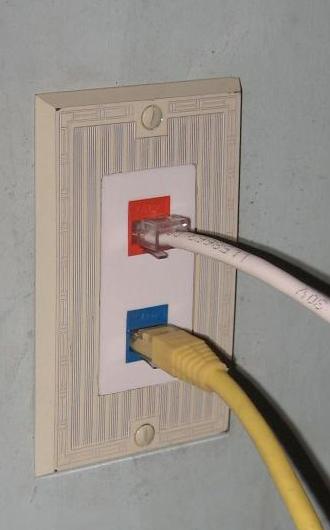
Here I modified an old Despard uniline deco outlet cover to fit a Decora device, here a duplex ethernet jack.
Only reason for the orange and blue jacks is that it's my college's school colors, Syracuse Universuty.
 Of course almost nobody will make
the "connection".
Of course almost nobody will make
the "connection".
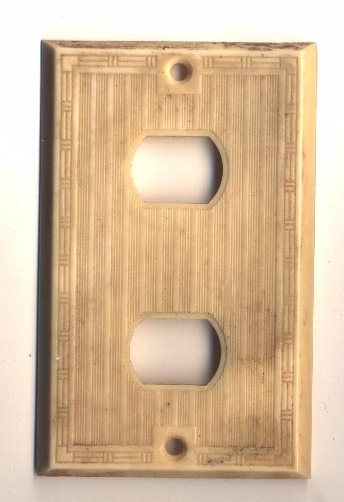
Talking about outlets, I would like to buy more covers of this
style below. This particular one is for Despard outlets, but I
would also like to get this style that fits regular outlets
and switches. Notice the engraved pattern and lines. These were made about 50 years ago.
This example is kinda dirty, but I wanted
the fine detail of the style to be clearly shown.
e-mail: wa2ise@ix.netcom.com
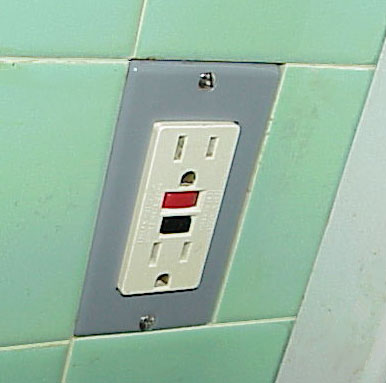
Installed a GFCI outlet in the bathroom of my mom's house.
"What's unusual about that?" you ask. Well I was able to
mount it so the cover plate was flush with the tile on the
wall. So it looks like another tile except for the different
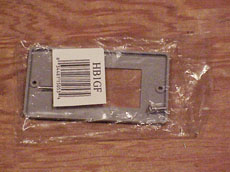
color. The cover was nearly the right size to fit between
the existing tiles vertically. I had to file the cover a little
for a better fit. This outlet is between the sink and an old fashioned
1950's era wall mount metal clothes hamper. Yes, the bathroom dates from
then, that's why the funky tile color. The tile to the right
was a salvaged scrap from previous bathroom maintenance, the ragged
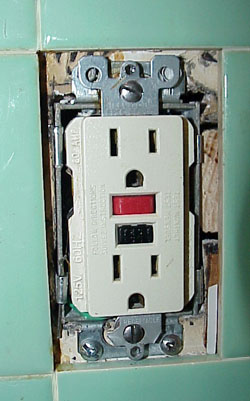
breaks hidden by the hamper trim. The electrical box was mounted
to the sheetrock behind the tile using those F shaped metal things.
Also a few screws to the sheetrock, though I don't expect those to
do that much.
For added support I added a block of wood about 2 inches thick
to fit between the box
and the wall stud the hamper mounts to. Cut to fit. Removed the hamper
to install a screw thru the stud to attach the block of wood to the stud.
And with some carpenter's glue as well.
And in
turn the electrical box has screws to mount it firmly to the block.
You can see this block to the right of the box in the picture.
That way the wall won't flex as one plugs and unplugs hair dryers and
such. Do not grout the cover plate though (or lightly grout it so you could easily remove the grout
with a utility knife), you
need to be able to remove it to gain access to the electrical
box as per NEC code.
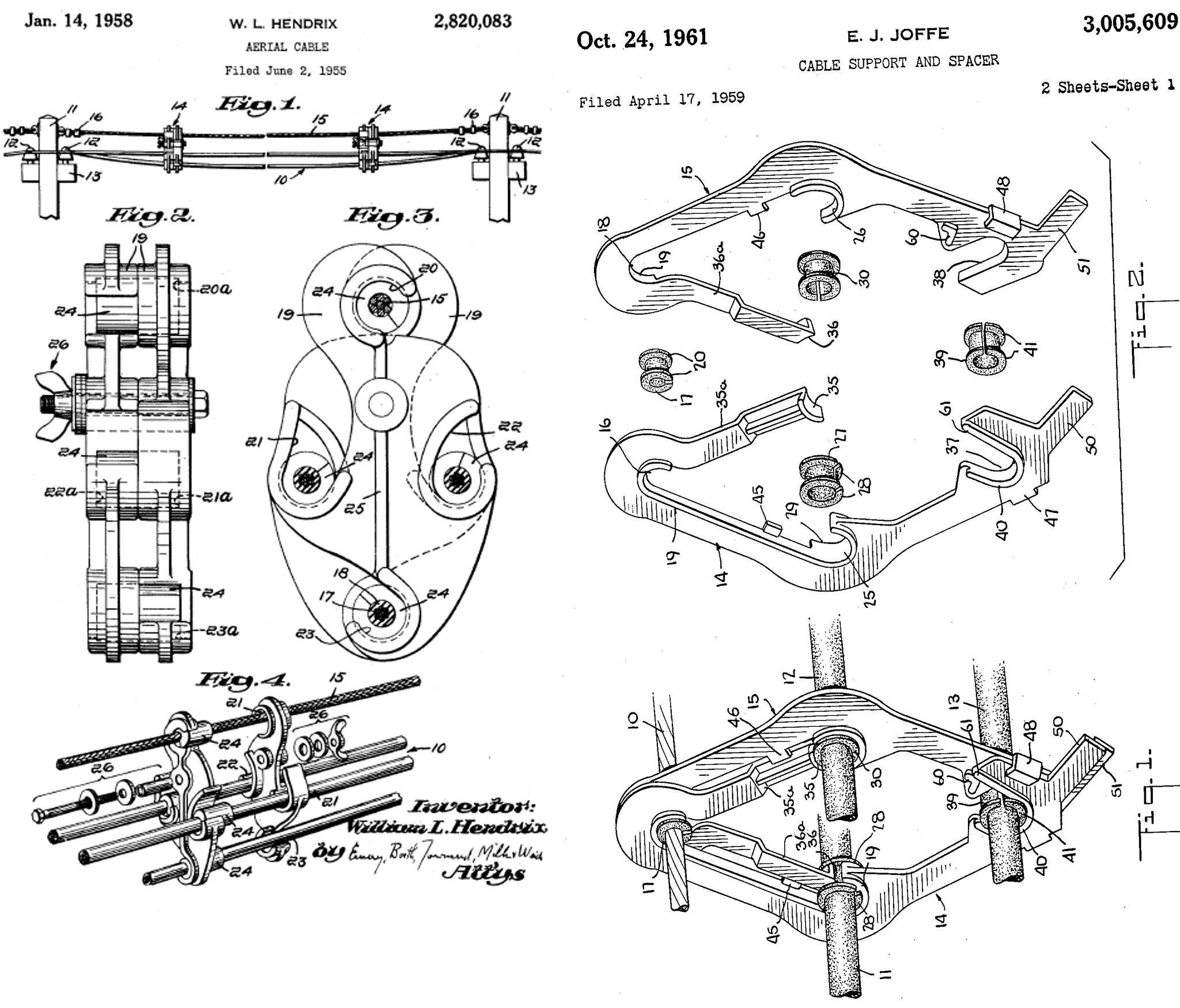
An insulator: 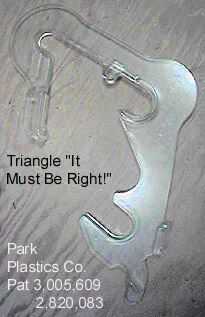 And the patent diagrams
Found it on the ground back in the mid 1960's just after they installed new lines.
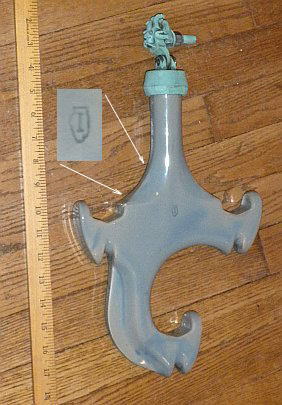
And a ceramic one from the same era the linesmen just gave me. It has a logo: an outline of
Illinois with an "I" in the middle.
A portable kilowatt/hour meter: 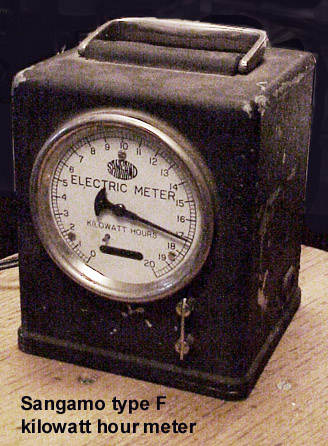
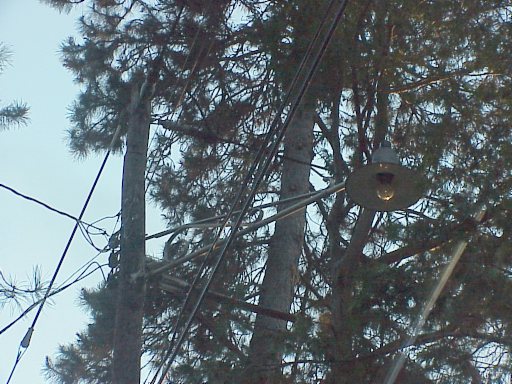
Some old streetlights (in service as of December 2001):
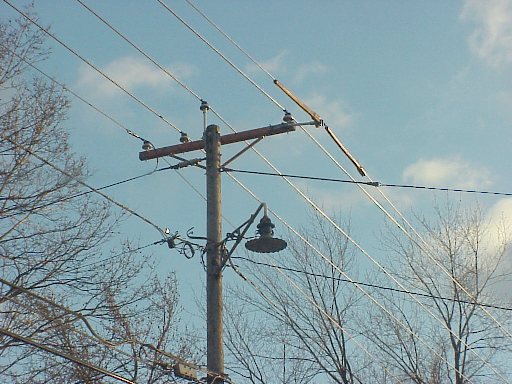
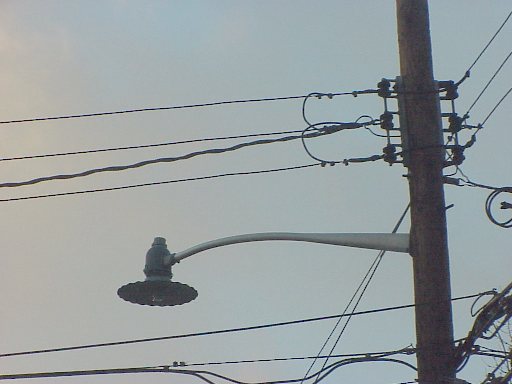 Center of the 3 insulators is the neutral,
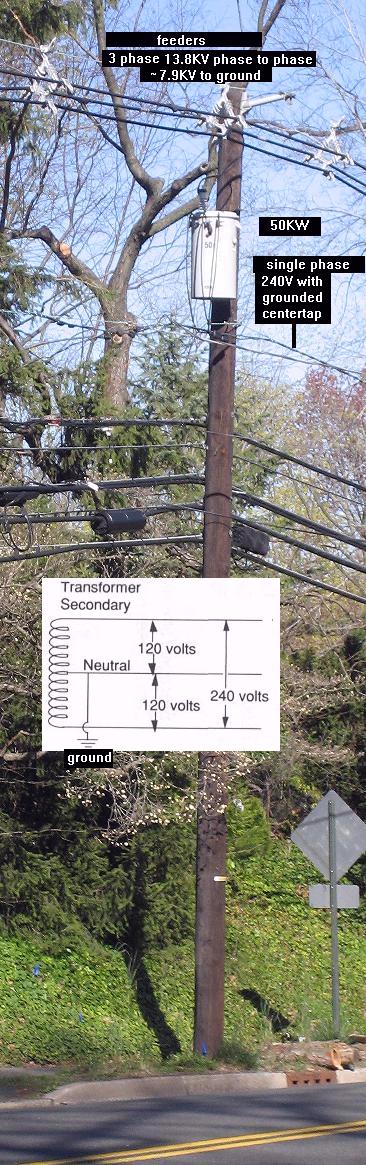
These 3 wires feed 240V grounded centertap to houses.
Center of the 3 insulators is the neutral,
These 3 wires feed 240V grounded centertap to houses.
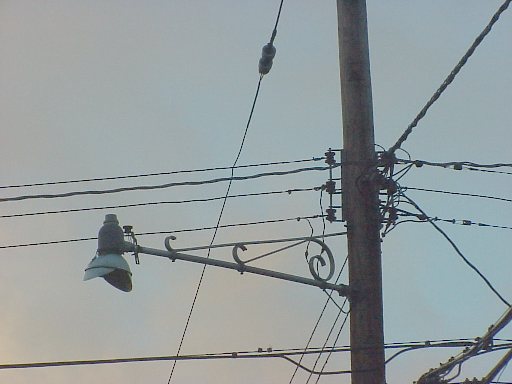
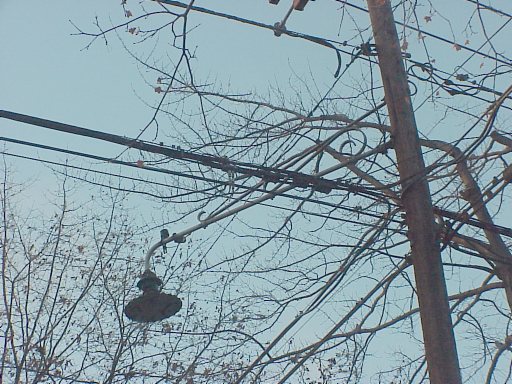
 Top insulator of the 3 is the neutral (they used to have
3 separate wires strung on these insulators, feeding 240V grounded centertap to houses)
Top insulator of the 3 is the neutral (they used to have
3 separate wires strung on these insulators, feeding 240V grounded centertap to houses)
Cobra head on old fashioned support: 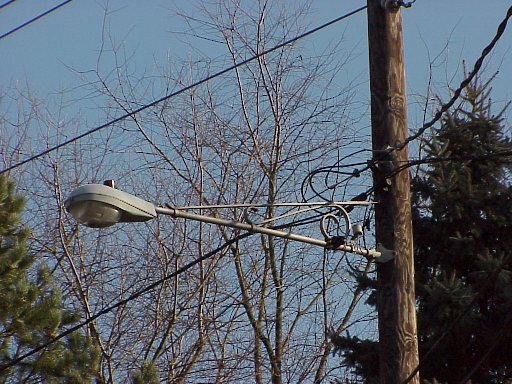
Power of patriotism: USA power: